

What is the maximum and minimum batch size that a jelly candy production line can handle?
Jan 12, 2026
Leave a message
Hey there! As a supplier of jelly candy production lines, I often get asked about the maximum and minimum batch sizes these lines can handle. It's a crucial question for anyone looking to invest in a production line, whether you're a small - scale artisanal producer or a large - scale industrial manufacturer. So, let's dig into it.
Understanding Batch Sizes in Jelly Candy Production
First off, what do we mean by batch size? In simple terms, it's the amount of jelly candy that can be produced in one continuous run on a production line. The batch size can vary widely depending on several factors, including the type of equipment, the recipe, and the production goals.
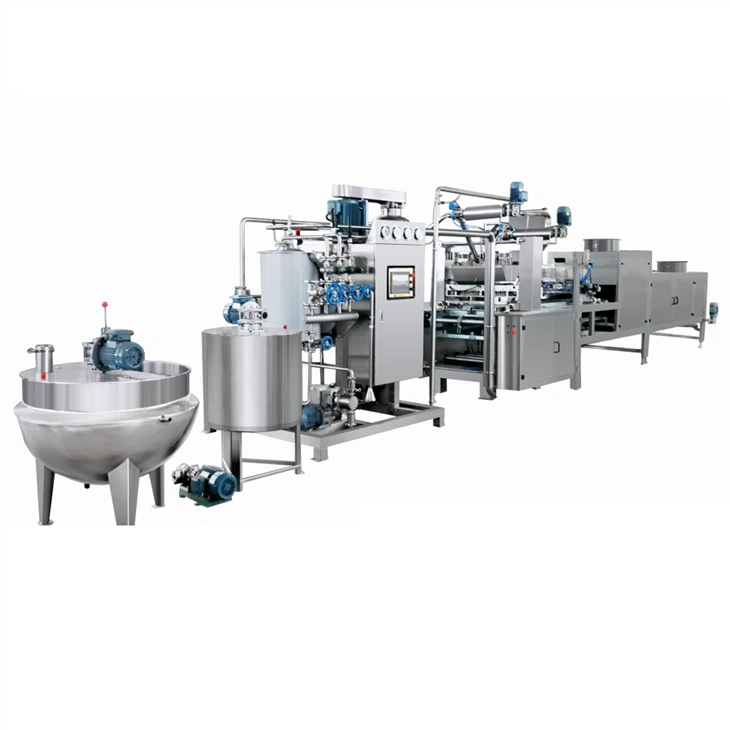

Minimum Batch Size
The minimum batch size is the smallest amount of jelly candy that a production line can effectively produce. For a jelly candy production line, this is influenced by a few key elements.
One of the main factors is the equipment's design. Many jelly candy production lines have certain components that need to reach a specific operating state to function properly. For example, the cooking and mixing units often require a minimum volume of ingredients to ensure uniform heating and mixing. If the batch is too small, the ingredients might not circulate well, leading to inconsistent cooking and an uneven product.
Another consideration is the recipe itself. Some jelly candy recipes rely on specific chemical reactions during the cooking and setting process. These reactions need a certain amount of ingredients to occur optimally. For instance, the gelling agents used in jelly candies need to be present in sufficient quantities and in the right ratio to work effectively. If the batch is too small, it can be difficult to maintain these ratios, resulting in jelly candies that don't set properly or have an unappetizing texture.
For most entry - level Jelly Candy Production Line, the minimum batch size is usually around 5 - 10 kilograms. This amount allows the equipment to operate smoothly and ensures that the recipe can be executed correctly. Smaller batches may not be cost - effective either, as the startup time and energy consumption for the equipment are relatively fixed, regardless of the batch size. Producing very small batches may result in higher per - unit costs.
Maximum Batch Size
On the flip side, the maximum batch size represents the largest amount of jelly candy that a production line can handle in one go. This is determined by the capacity of the individual components of the production line.
The cooking and mixing equipment is a major limiting factor. These machines have a maximum volume they can hold and process. If you try to exceed this volume, the ingredients won't be cooked or mixed properly. For example, the heat transfer may be inefficient, leading to under - cooked or over - cooked spots in the jelly mixture.
The filling and molding units also determine the maximum batch size. These units need to handle the jelly candy mixture at a controlled rate to ensure accurate filling and proper molding. If the batch is too large, the filling process may become chaotic, resulting in misshapen or under - filled candies.
For large - scale industrial Jelly Candy Production Line, the maximum batch size can go up to several hundred kilograms. High - end production lines are designed with larger cooking vessels, efficient mixing systems, and high - speed filling and molding units to handle these large volumes. However, it's important to note that as the batch size increases, so does the complexity of managing the production process. You need to have a reliable quality control system in place to ensure that every single jelly candy in the large batch meets the required standards.
Factors Affecting Batch Sizes
There are other factors that can affect the maximum and minimum batch sizes of a jelly candy production line.
Equipment Type and Technology
The type of equipment you choose plays a big role. Older, less advanced production lines may have more limited batch size capabilities. For example, a simple manual - operated production line may have a lower maximum batch size compared to a fully automated line. Automated lines are designed to handle larger volumes more efficiently, with features like continuous cooking and high - speed filling.
Recipe Complexity
A more complex recipe may require a different batch size range. Recipes that involve multiple layers, inclusions, or complex flavor combinations may need a more precise control of the production process. This could mean that the minimum batch size needs to be larger to ensure that all the elements are combined and processed correctly. On the other hand, extremely complex recipes may also limit the maximum batch size, as it becomes more difficult to maintain consistency across a large batch.
Production Space and Logistics
The available production space and the logistics of the operation also matter. If you have limited space in your factory, it may be difficult to accommodate a large - batch production line. Additionally, you need to consider how you'll handle the raw materials and the finished products. For large - batch production, you need to have sufficient storage for the ingredients and a well - organized system for transporting and storing the finished jelly candies.
Comparing with Other Candy Production Lines
It's interesting to compare the batch size capabilities of jelly candy production lines with other types of candy production lines, such as the Hard Candy Production Line and the Hard Candy Lollipop Making Machine.
Hard candy production generally has different requirements. The cooking process for hard candy is much more intense, often requiring higher temperatures for a longer period. The minimum batch size for hard candy production may be similar to that of jelly candy, around 5 - 10 kilograms, due to the need for proper heat transfer and mixing. However, the maximum batch size for hard candy production lines can sometimes be larger. This is because hard candy mixtures are more stable during the cooking and molding process, and the equipment can often be designed to handle larger volumes more easily.
Hard candy lollipop making machines also have their own batch size characteristics. These machines usually have a more specialized function of attaching the lollipop sticks and molding the hard candy into the lollipop shape. The minimum batch size is often determined by the setup time for the stick - attaching mechanism. The maximum batch size is limited by the speed and capacity of the molding and stick - inserting units.
Making the Right Choice
So, how do you decide on the right batch size for your jelly candy production? It all comes down to your business goals.
If you're a small - scale producer, focusing on niche or artisanal jelly candies, a smaller batch size may be more suitable. You can experiment with different recipes and flavors, and cater to a more exclusive market. A production line with a minimum batch size of 5 - 10 kilograms would be a good fit.
On the other hand, if you're aiming for mass - market production, you'll need a production line that can handle larger batches. Look for a high - capacity Jelly Candy Production Line that can produce several hundred kilograms per batch. This will help you meet the high demand and keep your production costs down.
Let's Talk!
Whether you're just starting out or looking to upgrade your existing production line, I'm here to help. Figuring out the right batch size for your jelly candy production is crucial, and I can provide you with the expertise and the right equipment to meet your needs. If you're interested in learning more about our jelly candy production lines or have any questions about batch sizes, don't hesitate to reach out. Let's start a conversation and see how we can make your jelly candy production a success!
References
- Industry reports on candy production technology
- Manufacturer's specifications for jelly candy production lines
- Research on food processing and recipe optimization for jelly candies