

How to choose a bakery oven for a large - scale bakery?
Aug 27, 2025
Leave a message
Hey there, fellow bakers! If you're running a large - scale bakery, one of the most crucial decisions you'll make is choosing the right bakery oven. As a bakery oven supplier, I've seen firsthand the impact that the right oven can have on your business. In this blog, I'll share some tips on how to pick the perfect oven for your large - scale bakery.
1. Consider Your Production Volume
The first thing you need to think about is how much you need to bake on a daily basis. A large - scale bakery typically has a high demand, so you'll need an oven that can handle the volume. For instance, if you're churning out hundreds of loaves of bread, pastries, and cakes every day, a small countertop oven just won't cut it.
Let's say you're making a variety of bread. A Deck Baking Oven might be a great option. These ovens usually have multiple decks, allowing you to bake different types of products simultaneously. They're also known for providing even heat distribution, which is essential for consistent baking results. If you're looking to bake a large quantity of products at once, a deck oven can be set up to handle a high throughput.
On the other hand, if you're more focused on mass - producing items like cookies or small pastries, a Rotary Baking Oven could be your go - to. Rotary ovens are designed to rotate the baking trays, ensuring that all products are evenly baked. They can bake a large number of items in a relatively short period, making them ideal for high - volume production.
2. Think About the Type of Baked Goods
Not all ovens are created equal when it comes to different types of baked goods. Each type of product has its own specific baking requirements.
Bread: Bread usually needs a high - heat environment to create a crispy crust and a soft interior. Deck ovens are often preferred for bread baking because they can reach and maintain high temperatures. The stone decks in these ovens absorb and radiate heat, which helps in achieving that perfect crust. Some deck ovens also allow you to inject steam, which is crucial for creating a moist environment during the initial stages of bread baking.
Cakes and Pastries: These delicate treats require more gentle and even heat. Convection ovens, whether they're deck or rotary, are great for cakes and pastries. The circulating hot air in convection ovens ensures that the heat is evenly distributed, preventing uneven baking and burning. If you're using a deck oven for cakes, make sure it has a good convection system to get the best results.

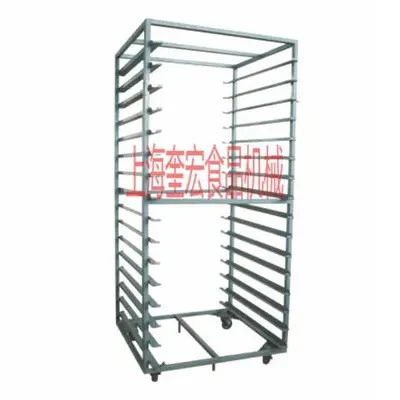
Cookies: For cookies, you need an oven that can bake them quickly and evenly. Rotary ovens are often a popular choice for cookie production. Their rotating trays ensure that all cookies are exposed to the same amount of heat, resulting in uniform baking.
3. Energy Efficiency
Running a large - scale bakery means using a lot of energy, and your oven is one of the biggest energy consumers. Energy - efficient ovens can save you a significant amount of money in the long run.
Look for ovens with good insulation. Well - insulated ovens retain heat better, reducing the amount of energy needed to maintain the desired baking temperature. Some modern ovens also come with energy - saving features like programmable settings. You can set the oven to turn on and off at specific times, or adjust the temperature based on your baking needs.
Another aspect to consider is the type of fuel the oven uses. Electric ovens are generally more energy - efficient than gas ovens in some cases, but gas ovens can heat up faster. It's important to weigh the pros and cons of each fuel type based on your local energy costs and availability.
4. Maintenance and Durability
In a large - scale bakery, your oven is going to be in constant use. So, it needs to be durable and easy to maintain.
Choose an oven made from high - quality materials. Stainless steel is a popular choice for oven interiors and exteriors because it's durable, resistant to corrosion, and easy to clean. Look for ovens with easily accessible components. This makes it easier for maintenance staff to perform routine checks and repairs.
Also, consider the availability of spare parts. If your oven breaks down, you'll want to be able to get the necessary parts quickly to minimize downtime. As a supplier, I can tell you that it's always a good idea to choose an oven from a reputable manufacturer that has a wide network of spare parts suppliers.
5. Budget
Of course, your budget is an important factor when choosing a bakery oven. High - end ovens with all the bells and whistles can be quite expensive, but they may also offer features that can improve your baking process and increase your productivity.
However, that doesn't mean you have to break the bank. There are many mid - range ovens that offer a good balance between features and cost. You need to evaluate your needs and determine how much you're willing to spend. Sometimes, it's worth investing a little more upfront in a better - quality oven that will last longer and save you money on energy and maintenance in the long run.
6. Space Requirements
Large - scale bakeries often have limited space. You need to choose an oven that fits well in your bakery layout.
Measure the available space in your bakery before you start shopping for an oven. Consider the dimensions of the oven, including its height, width, and depth. Also, think about the clearance space around the oven. You need enough room for staff to load and unload the oven safely, as well as for ventilation.
Some ovens, like deck ovens, can be stacked to save space. This is a great option if you have limited floor space but need a high - capacity oven. Rotary ovens, on the other hand, may require more floor space due to their rotating mechanism.
7. Ease of Use
Your bakery staff will be using the oven on a daily basis, so it needs to be easy to operate.
Look for ovens with user - friendly controls. Digital displays and touch - screen interfaces make it easier for staff to set the temperature, time, and other baking parameters. Some ovens also come with pre - programmed settings for different types of baked goods, which can be a real time - saver.
Training your staff on how to use the oven properly is also crucial. As a supplier, I can offer training and support to ensure that your staff can operate the oven efficiently and safely.
8. Safety Features
Safety should always be a top priority in your bakery. Your oven should have adequate safety features to protect your staff and your business.
Look for ovens with features like over - temperature protection. This will automatically shut off the oven if the temperature gets too high, preventing fires and damage to the oven. Some ovens also have door locks to prevent accidental opening during the baking process, which can cause burns.
Ventilation systems are also important for safety. Proper ventilation removes smoke, steam, and other fumes from the oven, creating a safer working environment.
Conclusion
Choosing the right bakery oven for a large - scale bakery is a big decision, but by considering factors like production volume, type of baked goods, energy efficiency, maintenance, budget, space requirements, ease of use, and safety features, you can make an informed choice.
As a bakery oven supplier, I'm here to help you every step of the way. Whether you need more information about Deck Baking Ovens or Rotary Baking Ovens, or you have questions about energy - efficient models, I'm just a message away. If you're interested in discussing your specific needs and finding the perfect oven for your bakery, don't hesitate to reach out. Let's work together to take your bakery to the next level!
References
- "Bakery Equipment Handbook" by John Doe
- "The Art of Baking in Large - Scale Operations" by Jane Smith
- Industry reports on bakery oven technology and trends